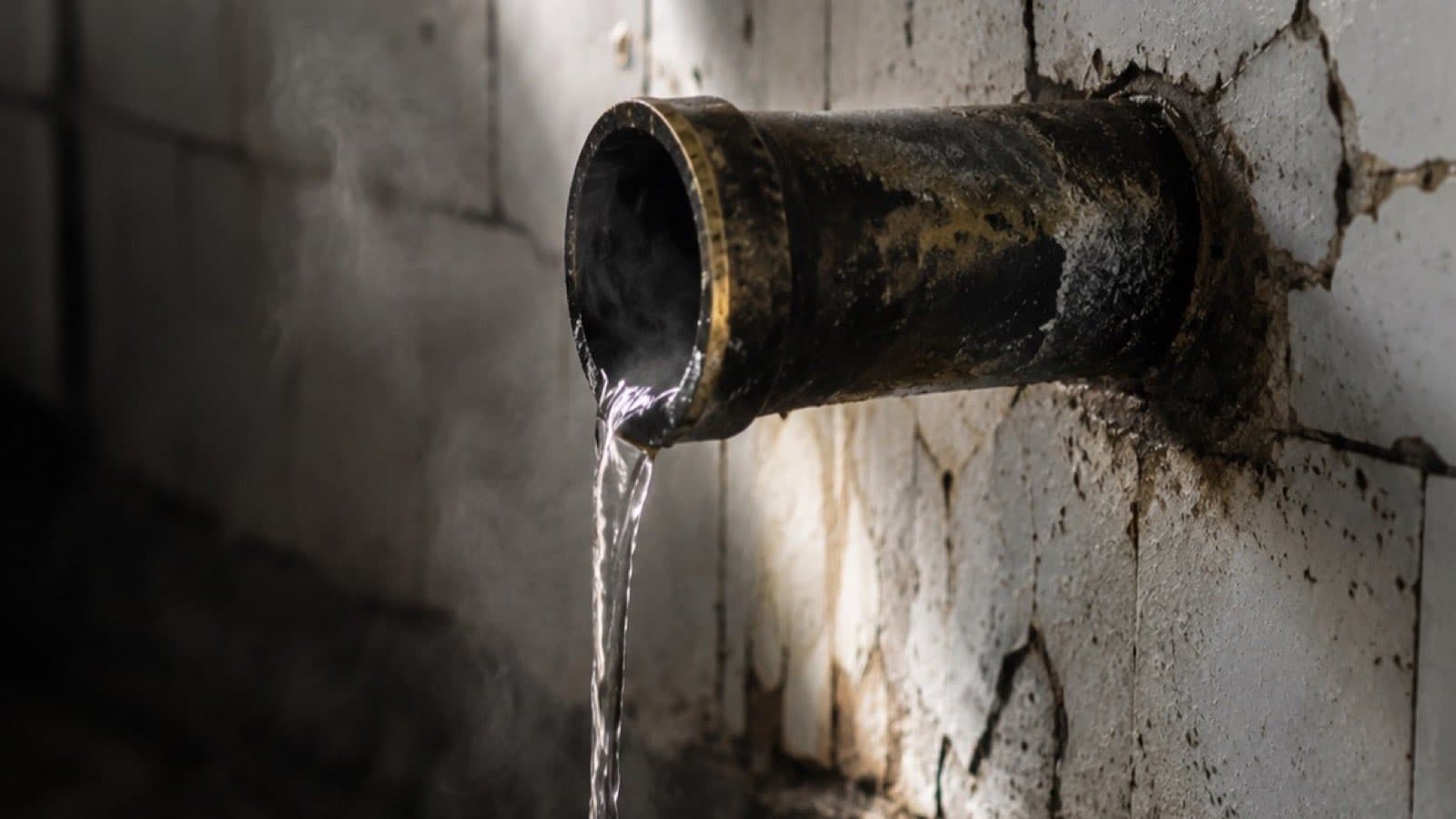
In 1934 George Bernard Shaw visited a geothermal field near Rotorua, in New Zealand's North Island, and is said to have exclaimed that this could be the very gates of hell. According to the operator of Hell's Gate, local Māori then chose that phrase as the English name for the place. The older name is Tikitere, and the operator tells its story too: more than 650 years ago a woman named Hurutini, badly treated by her husband, threw herself into a boiling pool, and her mother's cry of grief, "Auē tāku tiki nei", was shortened over time into the name the ground still carries.
What struck Shaw is what still strikes everyone who goes: the smell of rotten eggs. Hell's Gate says Māori have used its mud and sulphur water for more than 800 years, warriors among them, to heal their battle-scarred bodies. Today a visit means a mud bath, where you lather the mud over your skin, and then a soak in a sulphur spa to rinse it off.
That smell is the best-known thing about sulphur water, and the least informative.
Why does some sulphur water smell and some not?
Because sulphur reaches groundwater in two very different forms. Sulphate is sulphur bound to oxygen. It is stable, has no smell and is common in ordinary bottled mineral water. Sulphide, mostly hydrogen sulphide, H₂S, is a dissolved gas, and it is what your nose is reacting to. It escapes from open water into the air, which is why a sulphur bath smells most at the inlet and in closed rooms, and least in an outdoor pool far from where the water enters.
The nose is extraordinarily sensitive to it. Half of a test panel can smell hydrogen sulphide at about 0.47 parts per billion and identify it at about 4.7. Spa water is measured on another scale altogether, in milligrams per litre. The operator of the spa at Piešťany in Slovakia gives 4.7 milligrams of hydrogen sulphide per litre for its water; Terme di Saturnia in Tuscany gives 14.5. To a nose both are simply "sulphur". The nose cannot tell you that one has three times as much as the other. And after a while in the steam you may stop noticing it altogether, because hydrogen sulphide is known for briefly dulling the very sense it sets off.
A water can also carry a great deal of sulphur in the form you cannot smell. Baden, in the Swiss canton of Aargau, has been a spa since the Romans called it Aquae Helveticae, and English Wikipedia still describes its springs as hot sulphur springs. The German article gives the water as 46.6 °C with a total mineralisation of 4,450 mg per litre, the highest in Switzerland, and names sulphate and calcium as its most prominent constituents. Hermann Hesse took a cure there and wrote Kurgast, published in 1925, set mostly in the old bath quarter on the bend of the Limmat. The new bath in that quarter, Fortyseven, opened in 2021 and takes its name from the 47-degree spring.
The 102 baths that name sulphur among the dominant constituents of their water include both kinds, because most published analyses do not separate them in a way that can be compared. If you care about the smell, read the analysis: hydrogen sulphide or sulphide on the sheet means you will notice it; sulphate alone may mean you notice nothing.
Tbilisi: a capital named for warm water
The Georgian capital takes its name from the Old Georgian word tpili, "warm", given for the sulphurous hot springs that still supply its public baths. The founding legend, as Wikipedia tells it, has King Vakhtang I hunting in the fifth century: his falcon and a pheasant fell into a hot spring, and he built a city on the spot.
The baths stand in Abanotubani, the bath district on the east bank of the Mtkvari, below the Narikala fortress. They are low buildings, mostly underground, so what you see from the street is a field of brick domes with small openings for light, and people walk across the roofs. Pushkin came through in 1829 and wrote that he had never seen anything more luxurious than the baths of Tiflis.
King Erekle's Bath is one of the bathhouses still working there. The operator describes rooms with pools of hot and of cold sulphur water, a Finnish sauna and a Turkish steam room, and it rents its rooms privately rather than as a shared hall. A scrub, called kisa, and massage are booked separately. The terms of the company that runs it, and its neighbour Chreli Abano, carry the warning every sulphur bath should print somewhere: silver jewellery tarnishes in the water.
How hot is sulphur thermal water?
At the spring it is often far too hot to bathe in. Of the 49 sulphur baths that publish a spring temperature, 22 report 50 °C or more, and in those the water is cooled before it reaches a pool.
Piešťany: a spa island and a broken crutch
Slovenské liečebné kúpele Piešťany, the spa at Piešťany, sits on an island between two arms of the river Váh, and its springs come up at 67–69 °C, according to both Wikipedia and the operator, Ensana, which counts ten of them on the island. The other half of the cure is mud. The operator says it is harvested from the banks of the Váh and left to mature for at least a year in pools of the thermal water, and that it is applied at about 45 °C.
The town's symbol is a man snapping his crutch over his knee. In 1894 Ľudovít Winter, whose family ran the spa from 1889 to 1940, asked the painter Arthur Heyer for a single figure that would stand for recovery, and Heyer sketched the Crutch-breaker. Forty years later the sculptor Robert Kühmayer cast him in bronze. He stands at the western end of the Colonnade Bridge, built by Emil Belluš in 1930–33, and the inscription at the eastern end gives the spa's motto: Surge et ambula, get up and walk.
Sirmione: a spring on the bed of Lake Garda
At Sirmione the spring is under the lake. The local tourist board says a hot sulphur spring was known there from the Renaissance, welling up from the lake bed about 250 metres off the east shore, and Italian Wikipedia puts it 19 metres below the surface, deep enough that nobody could use it. The attempt to pipe the water ashore while keeping its heat succeeded only in 1896.
The operator traces the water back to rain falling on Monte Baldo, above 800 metres, and a journey of about twenty years through the rock to the Boiola spring, where it emerges at around 69 °C. It classifies the water as sulphurous and salso-bromo-iodic, which means it also carries salt, bromine and iodine. That water now supplies Aquaria, the thermal spa of Terme di Sirmione, and the therapy centre Terme di Sirmione Virgilio at Colombare.
Saturnia: water that arrives at body heat
Terme di Saturnia, in southern Tuscany, is the opposite case. The operator says the water starts as rain on the slopes of Monte Amiata, runs underground for about forty years and comes up at 37.5 °C, the temperature of a human body, so nothing needs to be cooled. It feeds the thermal park and then runs on to the Cascate del Mulino. The local legend, which the operator retells, has Saturn hurling a thunderbolt at the earth and warm sulphurous water gushing from the crater it left.
Bad Füssing: drilling for oil
Some sulphur springs were found by people looking for something else. In 1938, in the Lower Bavarian countryside, a drill searching for oil reached about a kilometre down and struck sulphurous water at 56 °C instead, according to Wikipedia. Spa treatment began in the 1950s, and in 1969 Füssing was given the title Bad. Europa Therme and Therme eins are two of the baths in the town today, and both hold an official certification for their water.
What is a first visit to a sulphur bath like?
Inside, most sulphur baths look like any other thermal bath. The operators who see the most first-timers are the most explicit about the differences.
- Take your jewellery off before you go. Hell's Gate says its mud and water tarnish jewellery, silver above all, and advises leaving it off for 24 hours after bathing, because your skin goes on releasing minerals. The company behind King Erekle's Bath in Tbilisi says the same about silver. Hydrogen sulphide turns silver black with a film of silver sulphide, the same toning you see on old coins.
- Wear a dark or an old swimsuit. Hell's Gate warns that light colours may be discoloured by the mud and the sulphur spa. Its advice for the smell: rinse the suit thoroughly before you leave, then wash it separately in cold water as soon as you can and let it dry on a line rather than in a dryer.
- Expect a time limit, and keep to it. Hell's Gate allows 20 minutes in the mud bath per person per day, a limit it says it set after consulting health professionals and Māori elders. Terme di Saturnia recommends baths of up to 20 minutes, with your head kept above the water, and advises against diving and swimming in the pools.
- Read the rules for children and pregnancy. Hell's Gate sets minimum ages for the mud bath and the sulphur spa and does not recommend bathing while pregnant. The same Tbilisi company advises against its baths in pregnancy and with heart conditions or high blood pressure. Saturnia sets out its own conditions for pregnant visitors.
- Ask where the water comes in. If the smell is what you came for, that is where it is strongest.
A cure town or a day in the water?
These are two different trips. At Piešťany or at the therapy centre in Sirmione, sulphur water is part of a course of treatment, and at Piešťany the mud is as much the point as the water. At Saturnia's thermal park, at Fortyseven in Baden or in a private room in Tbilisi, it is a bath you go to for the water itself. 36 of the 102 sulphur baths hold an official medicinal-water certification, a status an authority grants after testing the water, not one an operator can award itself; if a cure is what you have in mind, that is the place to start, and the article on certified medicinal water explains what the label means country by country.
Does sulphur water help with the complaints operators list?
Sulphur water has a long association with skin, and the operators keep it alive. 38 of the sulphur baths list skin complaints among their indications, and 34 list musculoskeletal ones. Terme di Saturnia states that its sulphurous water is particularly effective for skin diseases. Terme di Sirmione writes that hydrogen sulphide may bring relief in psoriasis, citing studies it does not name, and recommends following your own doctor's advice. Ensana states that the Piešťany water helps with chronic musculoskeletal and inflammatory conditions and with eczema and psoriasis.
These are statements by the operators and the medical services they employ, not findings this article can confirm. Balneotherapy has a real research literature, and a contested one. If you have a condition you hope to treat, take medication, or are pregnant, ask your doctor before you book a cure.
The chemistry, at least, is settled. Your nose can tell you that hydrogen sulphide is present, and nothing about how much sulphur is in the water you are sitting in. Iron is the opposite case, a constituent you see on the stone long before you would taste it, and the article on iron thermal water follows it from the Engadine fountains to the drinking springs of Bardejov.